- More than 1,000 Hoosiers are among more than 100,000 Americans waiting for lifesaving organ transplants. In the U.S., another person is added to the transplant waiting list every eight minutes. Each day, 16 people die because a donated organ wasn’t available in time.
- Donation is a rare and incredible gift. The medical condition of a potential donor at time of death determines if donation is possible and what organs and tissue can be donated. Only three of every 1,000 people are medically eligible to become organ donors.
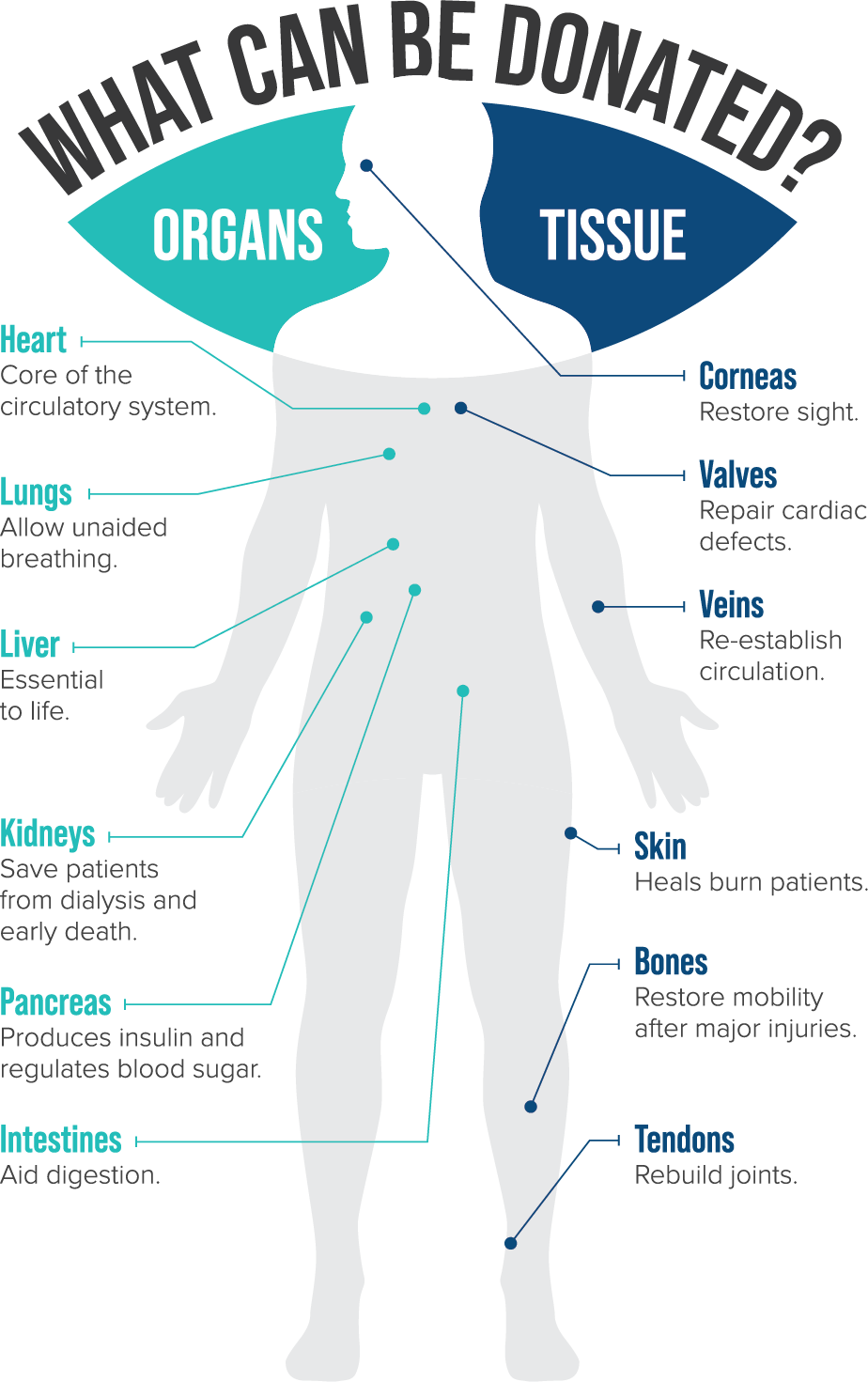
- One donor can save up to eight lives through organ donation and enhance the lives of more than 75 people through tissue donation. As a registered donor, you can be the reason a life is saved, a debilitating injury is healed and eyesight is restored.
The Donation Process
Donor heroes are treated with care, dignity and respect throughout the donation process. Before the recovery surgery, the recovery team pauses for a moment of silence to honor the donor and his or her family for their heroic decision to save and heal lives.
Recovery surgeries may take place in a hospital’s operating room or at the Indiana Donor Network Organ and Tissue Recovery Center. In either case, Indiana Donor Network coordinators care for the donor every step of the way.
Donor Path
Someone Says “Yes”
An individual signs up to be an organ and tissue donor at the BMV, on the Health app for iPhone or iPad, online at DonateLifeIndiana.org, online when applying for a hunting or fishing license with the Indiana Department of Natural Resources, or with the state when applying for or renewing their professional license to work in Indiana.
The Unthinkable Happens
A person arrives at a hospital with a life-threatening injury or condition, such as trauma from an accident, a stroke or cardiac arrest.
Lifesaving Options are Exhausted
Medical teams work hard and do everything possible to save their patient’s life. Only after all lifesaving efforts have been exhausted do medical teams contact Indiana Donor Network. The patient may be able to provide hope and healing as an organ and tissue donor.
Recovery Begins
After the patient has been declared legally deceased by a physician unaffiliated with the organ recovery team, highly skilled surgeons recover organs and prepare them for their lifesaving journey. Skilled tissue recovery coordinators recover eligible tissues. All recoveries are conducted with the utmost care and respect.
Transplantation
After recovery, organs are transported by ground or air to their designated transplant center, where someone is waiting for the lifesaving gift. Tissues are transported to recovery partners, where they will go on to provide healing for up to 75 people.
Recipient Path
Someone Becomes Seriously Ill
A person becomes sick and seeks medical attention.
One Solution Remains
Medical teams work hard and do everything possible to treat their patient. Physicians conclude that an organ transplant is required to save their patient’s life.
Placed On Waiting List
The patient is placed on the national transplant waiting list for a lifesaving organ.
A Potential Match is Found
A national system matches available organs from a donor with people on the national transplant waiting list. Some factors considered are: blood type, body height and weight, severity of illness, distance between donor and recipient, and tissue typing.
Lifesaving Transplant Performed
Once a match is found, the wait-listed patient is contacted by their transplant team. The patient arrives at their transplant center to prepare for lifesaving surgery.
How Does the National Transplant Waiting List Work?

The National Transplant Waiting List is managed by an independent organization called the United Network for Organ Sharing. UNOS utilizes a computerized network that matches donated organs with transplant candidates to save as many lives as possible.
The matching requirements were developed by the transplant community and approved by the national Organ Procurement and Transplantation Network board of directors. When a donor is identified, the donor’s blood type, tissue type, body weight and body size are matched against the list of patients currently waiting for transplant. In addition, the recipient’s severity of illness and time on the waiting list are factored into the matching process. To learn more about this process, visit UNOS’s website.
Donation Facts
- The first priority of a medical professional is to save their patient’s life. An individual’s donation status does not affect their medical care.
- Moral and religious leaders around the world favor organ and tissue donation as expressions of the highest humanitarian ideals. The gift of an organ or tissue essential to the life of another human being is consistent with the principles of Judeo-Christian teachings. If you have any questions, please consult your faith leader.
- Families of organ and tissue donors do not incur any financial expenses. All costs related to organ and tissue donation are paid by the recovery agencies.
- An open casket funeral is possible for organ and tissue donors. Through the entire donation process, the donor is treated with care, respect and dignity.

Learn about different types of donations and be inspired to change a life.

Read through some commonly asked questions about organ and tissue donation.

Learn about the organizations that we partner with in this important work.
Stories of Hope

Organ recipient
“I’m grateful for the chance to live a longer, healthier life. I’m so blessed, and I take nothing for granted.”
Husband of donor hero
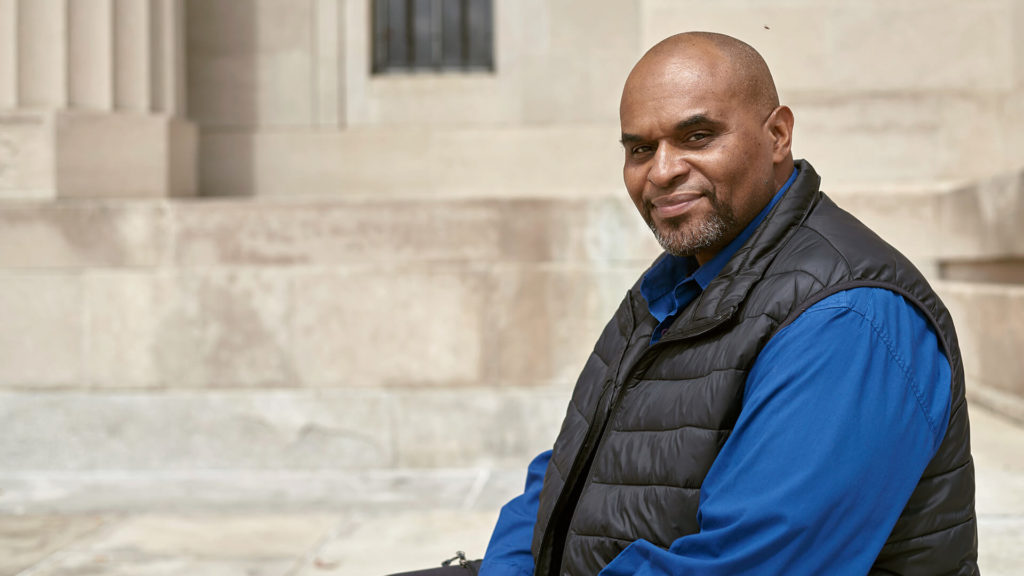
“There are so many in the black community in need of organ donations, but not many of us agree to donate,” William says. “After discussing and praying about it, we decided, ‘let’s just do this, and then if something happens, we’ll be able to help people.'”

Tissue recipient and living donor
“Leaving the world a better place is always my goal, and I think it’s a goal that others share. Being an organ donor or designating yourself as an organ donor is one way to do that.”